Missing Something

fanx-2015_bannerFanX 2015 is now in the books, and, well… I’m feeling pretty weird about not going. This was the fourth major pop-culture convention held under the Salt Lake Comic Con brand, and, counting the rival FantasyCon, the fifth convention of this type in Salt Lake in the past fourteen months. And my lovely Anne and I have attended all of them… until now.

We chose to sit this one out for perfectly good reasons. Coming only a handful of months after the last Comic Con in September, and only one month after Christmas, it was hard to justify the expense again so soon. Plus, we’re saving our pennies for a major adventure we have planned for the fall — more on that another time. And also, the first few celebrity guests that were announced just didn’t excite us that much. The con this time around looked like it was going to be built around several TV properties that are very popular right now, but which we’re not that into: Doctor Who (which I enjoy but I’m not crazy about), The Walking Dead, Game of Thrones. And to be perfectly honest, I think we were just a little burned out after going to four of these things in the space of a year. So we decided to pass on this one, and we were perfectly okay with that decision.

Later on, I was tempted when the organizers announced Christopher Lloyd, who was scheduled for one of the earlier cons but disappointed us by cancelling, but we decided one person really wasn’t reason enough to change our minds, considering the cost. Then came Carrie Fisher. I’ve met her before at a book signing, already have her autograph and a fuzzy snapshot of myself with her… I adore this hilarious, eccentric woman and would love the opportunity to get a better photo with her, but… I’ve met her before, so it was okay. Anthony Michael Hall and Ralph Macchio, two icons of my teen years in the Awesome ’80s, would’ve been fun to meet, but I could resist them. Same for Ray Park, a.k.a. Darth Maul in The Phantom Menace. Or so I kept telling myself. By this time, I was experiencing some genuine pangs of regret, but I stuck to my guns.

Last Monday, only days before the event, the organizers announced they’d gotten Nichelle Nichols, a.k.a. Uhura in the original Star Trek television series and movies. She was the first celebrity I ever met, way back in 1988, and the snapshot I have of her with me and my college buddy Jaren is one of my most cherished mementos. Jaren and I chatted soon after the announcement about how fun it would be for the two of us to take that photo to her and ask her if we could recreate it… but he wasn’t going to FanX this time either. If he had been, I would’ve caved. As it was, it just wouldn’t be as much fun to meet her again without him along, not after he and I had talked about it.

Then the con got underway, and a couple of my coworkers went to it, and photos started appearing on Facebook of cosplayers and celebrities and little kids with big excited eyes, and the local news covered it every night like it was a big important political rally. And those little pangs of regret started mushrooming into… something else. I felt an anxiety I haven’t really experienced since I was a kid. I’m an only child and I always liked being around the adults more than kids my own age, so when the adults were off someplace where I wasn’t welcome — parent-teacher conferences, R-rated movies, parties or bars, you get the idea — it drove me absolutely crazy. I couldn’t stand the feeling of not being included. I sometimes worked myself into a complete dither because I might be missing something. That’s what I’ve been feeling all weekend as FanX 2015 unfolded. Like there’s something happening that I should be at, but I’m not.

I kept these feelings to myself, at first. I thought I was being silly. Then, Friday night, Anne asked me if I wanted to try and go for the final, biggest day, which was yesterday. Saturday. I asked if she was just indulging me. And she said no, that we had been there at the beginning, at the very first Salt Lake Comic Con when nobody thought this thing was going to fly, and nobody knew what they were doing. “It’s like we’re a part of it,” she said, “and it feels really weird to not be there.”

I kissed her on the end of the nose and told her I felt the exact same way, and that I loved her for saying it.

We did not go, in the end. Again, we had reasons… money, timing, other priorities. Grown-up, responsible reasons. But we spent an hour tonight looking through other peoples’ photos on Facebook, and wishing we hadn’t been so damn responsible…


spacer

Mojo Needs Our Help!

Remember that video clip I posted a while back showing how the 1978 Battlestar Galactica might look with modern digital effects? If you’ll recall, that demo was created by a dude named Adam “Mojo” Lebowitz, a very talented visual-effects artist whose work has enlivened many well-loved sci-fi properties in recent years: the TV series Babylon 5, Star Trek: Voyager and Deep Space Nine, the theatrical film Serenity, and the director’s cut of Star Trek: The Motion Picture that was released to DVD. He also notoriously accepted an Emmy for his work on Ron Moore’s reimagined Battlestar Galactica while wearing a Colonial Warrior outfit from the original Galactica.

Well, I saw this morning on The Digital Bits, a DVD/BluRay news blog I follow, that Mojo is in a bad place right now and could really use some of the geek community’s legendary compassion and generosity:

For the last couple of years, Mojo has been suffering from chronic, debilitating pain that’s made it hard for him to work regularly. This led him into an unfortunate pain-killer addiction after a doctor prescribed opiates as a treatment without really investigating the cause. Needless to say, Mojo’s been in a downward spiral. The good news is that he’s finally checked himself into the Glendale Adventist Medical Center for treatment. The bad news is that he’s been diagnosed with Peripheral Neuropathy – essentially it’s severe nerve damage that results in chronic phantom pain, numbness, tingling and burning sensations in his limbs, tremors and lack of coordination. It’s not curable, but it is treatable with the proper medical supervision. But while Mojo has been recommended to a secondary treatment center by the specialists, it turns out that his crappy health insurance isn’t going to cover it. And because he hasn’t been able to work much in the last year, he’s broke and he’s in danger of being kicked out of his apartment. So Mojo desperately needs financial help. His friends (myself included) are doing what they can, but I wanted to throw out the word to all of you in the online film geek community.


If you’ve enjoyed Mojo’s work over the years, if you appreciated his efforts to try and get Battlestar Galactica Remastered going, if you simply enjoyed the clip he produced above – if that’s worth something to you – please consider sending him $10, $20, whatever you can (and feel like) chipping in via PayPal (to: mojospfx@aol.com). It may literally be the difference between Mojo getting back on his feet or being homeless. By the way, you can visit him here on Facebook, where he often posts CG renderings and other interesting things.

In the interest of full disclosure, I do not personally know Mojo, although I’ve had a couple of brief exchanges with him on Facebook, and he seems like a pretty cool guy. But I do enjoy his work, even though I’m on record as preferring the old-fashioned miniature and matte-painting FX techniques I grew up with to modern CGI. Mojo’s stuff seems far less, well, “digital” than a lot of the effects you see these days, especially on television. To my eye, his starships look almost as solid and massive as those created with physical models, and I know he spent a lot of time on that Battlestar demo trying to get the vapor trails from the Vipers’ turbo engines to look like the practical effects that were done in 1978. You have to admire that level of craftsmanship and passion for the project.

Also, I really despise the way American society positions so many people one illness away from living in a cardboard box. It’s not right, and it’s not fair that people who have bigger things to worry about have to live with that kind of fear. So, for all those reasons, I’m going to throw a sawbuck Mojo’s way. It’s the least I can do for a fellow human being who also happens to have contributed to so many of my obsessions. And I’d like to ask that everyone reading this do the same, even if you can only spare a couple bucks. Skip your Starbucks run today and help out a brother. And if you have a blog or some social media presence, spread the word…

spacer

Whatever Happened to Short Round, Anyhow?

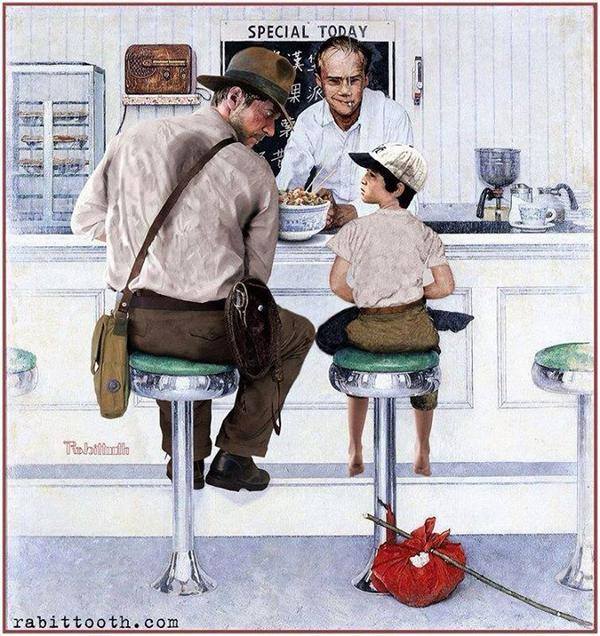
Earlier today, I ran across this little mash-up of Norman Rockwell and Lucasfilm, and I was sufficiently amused to pass it along:

indy+short-round_rockwellThe Chinese characters on the menu in the background and the vaguely non-Western features of the waiter suggest this is supposed to be somewhere in the Orient, possibly the moment when Dr. Jones and Short Round first encounter each other in Shanghai (“He tried to pick my pocket”), or maybe just afterward when Indy is trying to figure out what to do with the boy. But that’s not what I thought at first glance.

Maybe it’s because I instantly recognized the Rockwell painting this is based on, and Rockwell’s work of course embodies pure Americana, but whatever the reason, I initially assumed this was an American diner. And as I’ve always had it in my head that Indy brought Short Round back to the States after their adventures in Temple of Doom, I found myself imagining Indy was saying something like this:

“Now, look, Shorty, we’ve had some fun times, but you’re in America now… you’ve got to go to school like all the other kids!”

Admit it, you can hear Harrison Ford’s voice saying that, can’t you?

Incidentally, it still bugs me that Short Round wasn’t in Indiana Jones and the Kingdom of the Crystal Skull, at least for a cameo during the final scene. Surely he would’ve showed up for his old pal and benefactor’s wedding day? Sallah, I can forgive… Cairo was a long way from the U.S. even in 1957, but if Shorty is (presumably) an American citizen now, then where the heck was he? Of course, it’s always possible that he and perhaps even Sallah did not survive the war…

spacer

Useful German Expressions

Yesterday, my friend Karen — who knows of my affection for German words that articulate concepts English seems unable to easily define — sent me a list of “15 Unique Illnesses You Can Only Come Down with in German.” She suggested I might find numbers 6 and 15 particularly relevant:

6. FERNWEH

Fernweh is the opposite of homesickness. It is the longing for travel, or getting out there beyond the horizon, what you might call… awaysickness.


15. TORSCHLUSSPANIK

Torschlusspanik or “gate closing panic” is the anxiety-inducing awareness that as time goes on, life’s opportunities just keep getting fewer and fewer and there’s no way to know which ones you should be taking before they close forever. It’s a Zivilisationskrankheit that may result in Weltschmerz, Ichschmerz, or Lebensmüdigkeit.

It’s almost as if Torschlusspanik was coined exclusively for me! Also applicable:

11. WELTSCHMERZ

Weltschmerz or “world pain,” is a sadness brought on by a realization that the world cannot be the way you wish it would be. It’s more emotional than pessimism, and more painful than ennui.


12. ICHSCHMERZ

Ichschmerz is like Weltschmerz, but it is dissatisfaction with the self rather than the world. Which is probably what Weltschmerz really boils down to most of the time.


14. ZIVILISATIONSKRANKHEIT

Zivilisationskrankheit, or “civilization sickness” is a problem caused by living in the modern world. Stress, obesity, eating disorders, carpal tunnel syndrome and diseases like type 2 diabetes are all examples.

Ah, yes, Karen knows me well. Either that, or I really need to keep my neuroses more to myself…

spacer

“Good or Bad, He Made a Movie”

So, the writer, actor, and comedian Patton Oswalt has written a memoir called Silver Screen Fiend, in which he examines what he feels was an unhealthy relationship with movies in his younger days. Yes, he does use the word “addiction,” and he makes a pretty good case for why it applies in an interview that aired recently on NPR.

He also says he was finally able to break his compulsion, in part, because he was so disappointed with Star Wars Episode I: The Phantom Menace.

No doubt some of my readers probably just snickered. I, on the other hand, reacted to the interview’s title, “How ‘Star Wars’ Helped Patton Oswalt Beat His Movie Addiction,” with a disgusted roll of my eyes, and I almost didn’t bother to read the article. Seriously, I am so sick and tired of the kneejerk negativity that erupts whenever anyone mentions the Star Wars prequels, and The Phantom Menace in particular. I mean, come on, people, it’s been sixteen years since that movie came out… let it the hell go! The absolute last thing this world needs is any more prequel bashing. I certainly don’t have any interest in that conversation anymore.

Nevertheless, some kind of morbid curiosity compelled me to click through and find out what the hell Oswalt was actually saying. I don’t know, maybe I just wanted to find out how much of a dick the guy was or something. But to my surprise… it wasn’t quite what I thought, based on the headline. I mean, sure, he really didn’t like The Phantom Menace and he’s not afraid to say so… but he also said something about George Lucas that I found genuinely refreshing, considering the depressing “he’s a hack” groupthink I encounter everywhere these days:

I’ll put it this way — I was the worst kind of movie fan. I’m the kind of guy who saw 6 movies a day, didn’t write any movies, didn’t make any movies, but then could be armchair quarterbacking on a movie that I had no hand in making.


Yes, I thought [Phantom Menace] was a failure, but the dude took a shot at it. It hit me that I was spending days and days and nights and nights with my friends, arguing back and forth about this film but this guy made a movie. Good or bad, he made a movie. He’s on a different realm than you.

I remember saying before The Phantom Menace opened that, if nothing else, Lucas had some major cojones to even attempt to go back to Star Wars after so many years. I don’t think I would’ve had the courage to do it, myself, not after the original trilogy blew up into this enormous cultural institution that a significant number of people thought of as genuinely sacred. It seemed to me an impossible mountain to climb… there was just no way he was going to be able satisfy the incredibly overheated expectations and hopes that people attached to Episode I.

Before anyone starts ranting in the comment section, let me state for the record that I have exactly zero interest in debating yet again the merits or flaws of the prequels. But I would like to say that I have long been frustrated with the truly astounding amounts of bile directed at Lucas personally. Fanboys used to think he could do no wrong; now they think he can do no right. Both positions are equally nonsensical. Uncle George may not be a genius, but he’s also not a hack. He’s human. He got old and grew rusty in his craft. His vision drifted out of sync with the culture. He let us down. You know, it happens, guys. And it happens to a lot of creative people, unless they follow the Harper Lee route and retire after their one big hit. George Lucas didn’t do that. For whatever reason — and really, who knows what truly motivated him, but I’m pretty certain it wasn’t money, as so many sneering Comic Book Guy types claim — he decided to give writing and directing another go. And he failed, in the eyes of many — but certainly not allStar Wars fans. But in the end, he tried. And as Oswalt points out, that’s more than the vast majority of his most vociferous critics can claim.

Give the man a break. He deserves some degree of respect simply for creating this thing that we love so much that we couldn’t handle being disappointed by it.

spacer

The Latest Bit of Biz-Speak: Enterprise with a Capital “E”

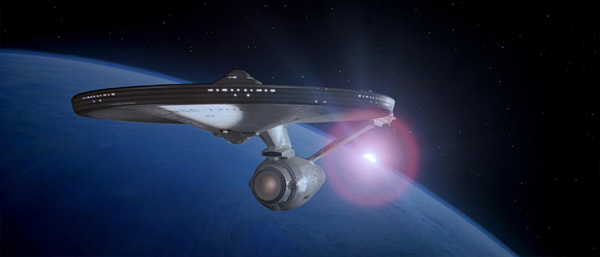
Here’s the latest thing that’s making me crazy in my professional capacities: business writing that capitalizes the word “enterprise,” as in “a very large company,” thusly: “We make products for Enterprises that require products.” And you want to cap that… why?

I don’t know about you guys, but anytime I see the word “Enterprise” with a capital E, this is what I think of:

star-trek-tmp_enteprise_sun


spacer

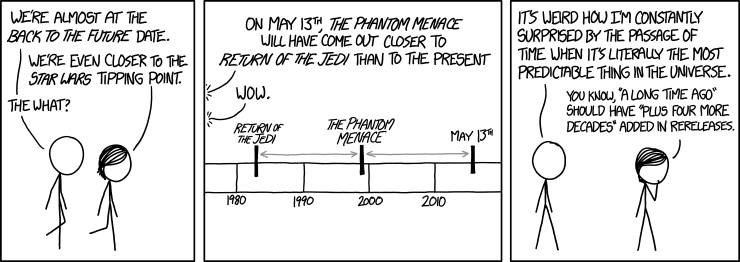
The Star Wars Tipping Point

Funny. I was just thinking something similar the other day, namely that the song “Jessie’s Girl” is now older in the year 2015 than the entire rock-and-roll genre was when that song came out in 1981. Sigh.

Star Wars

Source.

spacer

Neighbors Give In Return

A few weeks ago, I was feeling pretty low. The headlines about Ferguson and Eric Garner and the torture report, all coming so close to each other, followed by the inevitable scrimmage in social media and blog comments — which served as yet another solemn reminder that there are at least two Americas and they don’t quite exist on the same planet — left me utterly heartsick. Beaten down, demoralized, and wondering if a lot of my fundamental beliefs about this country and people in general were completely off-base.

And so it was I found myself standing one afternoon in front of the creaking, overloaded, not-dusted-often-enough shelves that comprise the Bennion Library, trying to decide what to read next. It wasn’t just a question of what I was in the mood for, or what I haven’t read yet. This was one of those cases where I needed to read… something… something that might restore some of my faith in humanity, or at least quell my growing conviction that the whole damn bunch of us deserve whatever’s coming so the cockroaches can have their turn on top of the evolutionary ladder. A mystery or an action-adventure novel wasn’t going to cut it; all too often, those genres are predicated on exactly the sort of inhumanity-to-man I’d had enough of. Similarly, I wasn’t very enthused about any of my sci-fi or Stephen King or Anne Rice books. While they don’t exactly ignore the human condition, they weren’t likely to say the sort of things I was craving to hear. Finally, my gaze fell upon a tattered paperback copy of Harper Lee’s To Kill a Mockingbird.

I’m not even sure how that one ended up in my collection, to be honest. I read it back in high school, like most people of a certain age, I imagine. (Is this one still assigned to kids, or has it been banished from the curriculum for some ridiculous PC reason?)  I remember experiencing it back then as something I had to endure rather than enjoyed. Like getting a vaccination or eating something that’s good for you. Beyond that, though, the book was just a blur. I couldn’t recall anything about the story or the characters, except a couple names and a scene in a courtroom… details I could have gotten from a blurb in a magazine about the movie version. And yet… at some point, for some reason, I picked up a copy of it… probably for a quarter at a thrift store or a library sale, and likely with intentions of revisiting it someday from an adult’s perspective. But I never got around to actually doing that. The book just ended up on a stack of other literary fiction works that I bought with good intentions but have largely ignored. But now, as my eyes followed the white stress-lines running the length of the book’s spine and took in the lettering of the title, smudged and faded by the sweat of someone else’s hand, some trace memory stirred deep in my mind. Like a vague sensory impression of the perfume your mother wore when you were a child, an elusive feeling more than anything you can really name. And I knew this was the book I needed to read just then.

I like to think I haven’t changed all that much since I was a teenager, that I’m still in touch with the sixteen-year-old boy I used to be, but the truth is… my teenaged self was a dumbass for failing to appreciate this book, because To Kill a Mockingbird is magnificent. First of all, it’s a wonderful evocation of a very specific time and place, namely small-town Alabama in the 1930s. (It occurs to me that part of the problem I had with it back in high school might have been the setting, of which I would have been relatively ignorant then. I know a lot more about the Depression now, and can much better imagine Model As rolling up and down dusty streets, and careworn farmers in overalls and the more well-to-do men in their white shirts and hats.) It’s a charming coming-of-age story — and I’m on record as being a real sucker for those — that realistically captures the essence of the pre-teen protagonist while also conveying a lot of adult truths. It’s unexpectedly funny in places, and the overall tone is warm and humane and just plain decent, which is what I needed. And all this is achieved with plain, unflowery language that simply tells the story. It really is a masterful achievement, and I understand now why so many people name it as their favorite novel.

But it’s the book’s core of decent humanity that really charmed, that soothed my battered soul just when I needed it most. That’s what I was remembering the afternoon I noticed it sitting in my stacks, and that’s what will stay with me after the details fade again (which I know they will; I fear my retention isn’t as good as it used to be, damned middle age!)

I think many people will remember the exchange between Scout, our protagonist, and her father Atticus that comes on the very last page:

“… Atticus, he was real nice… ”


His hands were under my chin, pulling up the cover, tucking it around me.


“Most people are, Scout, when you finally see them.”

But I was more deeply moved by a passage from a few pages earlier, when Scout has just met the mysterious Boo Radley whose presence has hovered like a shadow over the entire story:

Boo and I walked up the steps to the porch. His fingers found the front doorknob. He gently released my hand, opened the door, went inside, and shut the door behind him. I never saw him again.


Neighbors bring food with death and flowers with sickness and little things in between. Boo was our neighbor. He gave us two soap dolls, a broken watch and chain, a pair of good-luck pennies, and our lives. But neighbors give in return. We never put back into the tree what we took out of it: we had given him nothing, and it made me sad.

“I never saw him again… we had given him nothing, and it made me sad.” Something about that delineates so much of the human experience for me. It’s only after the fact, it seems, that we realize how we failed to be as good as we ought to have been. As good as we wish we were.

I think someday that’s the sentiment that’s going to be applied to this moment of history by the people who are living through it right now. Reading To Kill a Mockingbird did cheer me up… but it also highlighted for me how we’re failing, we Americans, we humans, to be as good to each other, to our neighbors, to the whole damn planet, as we ought to be. And it does make me sad.

spacer

Today’s Example of Tiresome Biz-Speak I Need Never See Again

Any permutation of the construction “ever-hyphen-whatever”: ever-growing, ever-changing, ever-challenging, ever-tightening, ever-expanding… you get the idea. Yes, it’s a useful construction that handily conveys the idea of unremitting, implacable forces that are constantly on the brink of spiraling out of your control (unless, of course, you buy Product X or Service Y right now to help you get a handle on it all!). But I’m seeing it everywhere, in just about every document I proof lately, and it’s really getting old…

That is all. Now back to your regularly scheduled Internet.

spacer

Shaping Up to Be One of Those Weeks

I spent my first three days back in the office from the holidays last week twiddling my thumbs. Then my project managers (or possibly their clients… somebody) seemed to wake up in the same fashion as someone who realizes they’ve missed their alarm and overslept by a couple of hours: with a snort, a surge of adrenaline, and a sudden mad scramble of activity. The resulting avalanche of work hit me on Friday, I ended up bringing a big project home with me over the weekend, and I just now looked up and saw that it’s nearly three o’clock. I’ve been proofreading nonstop since I got here at ten and had completely lost track of time.

Which means it’s time to bring this out again:

POTC_little-busy-right-now

Naturally, all this hell breaking loose coincides with a surge in mental fertility; I find I’ve suddenly got lots of ideas for blogging topics, in addition to other things, but no time or energy to spare for them, naturally. And that makes me feel like this:

angry-tusken

I’ve been in this job for nearly a decade now, and I still don’t understand why it’s always like this… feast-or-famine, either nothing going on or no time to breathe. Seriously, what’s wrong with spreading the load out a little more evenly, guys? Surely it can’t be that hard to plan?

Sigh. Back to proofreading…

spacer